
Amid the Alien Corn: Dennis Walder’s Memoir on Family Secrets and Apartheid
Dennis Walder’s memoir, 'Amid the Alien Corn,' explores his mother’s mysterious past across South Africa, Namibia, and Europe, blending personal history with the sociopolitical landscape of apartheid.
After finishing a degree at the College of Cape Town in the very early 1960s, Walder chose to leave discrimination South Africa, vowing never ever to return. In 1981, he was nonetheless withdrawed to talk to renowned playwright Athol Fugard for a book, and to take stock of what was taking place in the country.
Miki Flockemann does not benefit, consult, very own shares in or receive funding from any kind of firm or organisation that would gain from this article, and has divulged no pertinent affiliations beyond their scholastic consultation.
A Son’s Search for Maternal Truth
South African-born literary scholar Dennis Walder recently released an evocative life tale called In the middle of the Alien Corn: A Boy’s Memoir. In it, he tracks exactly how, also as a kid, he became aware that his mommy Ruth was withholding something of herself, and her past, from him. This disquiet comes to a head after her death.
In fact, Amid the Alien Corn is patterned by departures and returns between South Africa, the UK, Namibia and Germany. It provides remarkable peeks into the social and political landscapes Walder relocated between. In South Africa, there were interactions with members of the virtually failed to remember African Resistance Motion. There are also clearly defined encounters with cultural numbers, among them Gibson Kente and Nadine Gordimer.
The book paints a amusing and abundant summary of Walder’s childhood years and young the adult years. He matured near Cape Town in the 1940s and 1950s with his Namibian-born, German-speaking mom and estranged Swiss-born daddy. Yet, as you read, this shifts to a single-minded quest to get to the base of the contradictory accounts Ruth has actually given of her past.
But it’s his mother that’s at the heart of much of this perfectly composed publication. As a scholar of South African literature, I was excited by the intricacy it accomplishes. The visitor is drawn into Walder’s look for the reality regarding Ruth’s life, yet he additionally alerts us:
Navigating Political and Personal Landscapes
Walder’s mission to know more concerning Ruth’s past leads him and his other half Mary MacLeod to the archives and to genealogy researchers that map family members origins in Windhoek, Cape Community, Bad Liebenstein and Berlin.
He notes his anxiousness at the expanding sense that Ruth’s memories, as told to him or thought of, are becoming his own, unwanted. Taking on Ruth’s memories is a method of mourning a mommy he felt he did not truly understand or recognize.
It would certainly be a looter to tell what Walder discovers. Yet the factor Ruth kept her trick continues to be vague by the end. One could speculate that it was to secure her family members, or herself, or that she just tried to eliminate a personal background that really felt too difficult– or perhaps also shameful– to deal with.
His task is made all the extra tough by Ruth’s evasiveness. Like the Stolperstein monoliths (literally stones that you stumble across) in German cities to commemorate the areas where holocaust victims and survivors last lived, Walder’s quest leads to unforeseen explorations and living relatives he had not been mindful of.
Confronting Historical Silences and Memories
There are additionally bitter facts right here, provided that the mass graves of the aboriginal Herero and Nama occupants executed by German colonisers throughout the century’s first genocide were not sensible with interment rites.
As Walder later reminds us, the French thinker and scholar Roland Barthes defines household photos as providing only “fugitive knowledge”. Our analyses of what we see shown are unreliable.
Whatever the “truth” of her silence may be, the kid’s memoir is, if not a document, a memorial to Ruth’s life. The publication’s devotion, “For the Forgotten”, takes in a much wider sweep of mankind, throughout time and location. It motivates viewers to reflect on comparable silences within their very own and other families.
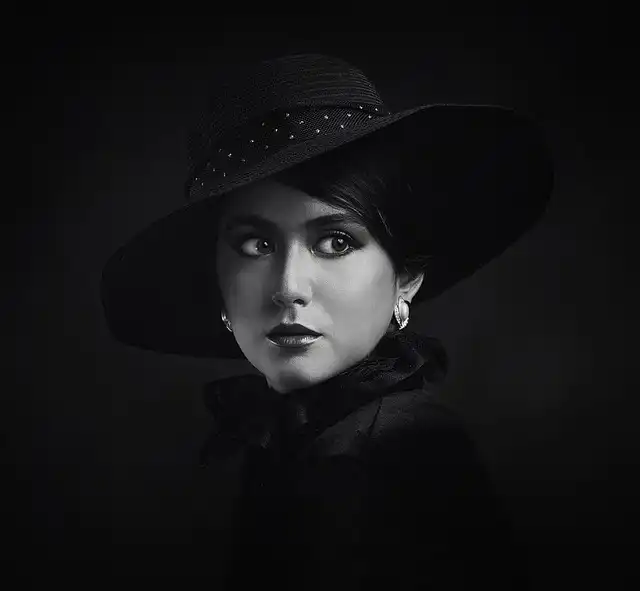
The cover is dominated by a striking black and white image of Ruth, that appears to radiate self-sufficiency, also decision. She has an enigmatic not-quite smile and holds the visitor’s look. This easy impression is quickly agitated by referrals to her frailty, her typically inconsistent accounts of past events. Her “tight smile” suggests a resolution to maintain words overlooked.
In it, he tracks how, also as a kid, he became mindful that his mom Ruth was withholding something of herself, and her past, from him. As you review, this changes to a single-minded mission to obtain to the base of the contradictory accounts Ruth has given of her past.
The book’s beginning begins with Walder’s trip to Cape Community in 1992 when he was 50, to bury Ruth. He moves between his own coming-of-age experiences and his attempts to reveal information regarding Ruth and her moms and dads, that relocated to Namibia in the very early 1900s from Germany. While doing so, Walder makes us knowledgeable about how personal backgrounds are gotten in touch with wider occasions.
Ruth’s presence after death remains in places like the grand Suite Lanwers in Windhoek, owned by her father when he was a successful tradesman. Now listed as a heritage home, it ends up being a site of memory he feels it is “a duty not to fail to remember” on her behalf.
Reflections on Belonging and Identity
This sense of unbelonging is shared by an intellectually precocious and sensitive young Walder. He’s unpleasant in his own skin while maturing in apartheid South Africa and its overbearing race legislations.
The visitor is drawn right into Walder’s search for the truth regarding Ruth’s life, however he also cautions us:
The book’s beginning begins with Walder’s trip to Cape Community in 1992 when he was 50, to bury Ruth. He relocates between his very own coming-of-age experiences and his efforts to uncover information regarding Ruth and her moms and dads, that relocated to Namibia in the early 1900s from Germany.
1 Apartheid South Africa2 areas including memoir
3 autobiographical memory
4 Dennis Walder
5 Family Secrets
6 German Diaspora
« Redwood National Parks Remove Books Following Federal History Directive