
Inside Stephen King’s Archives: Bicks Uncovers His Creative Process
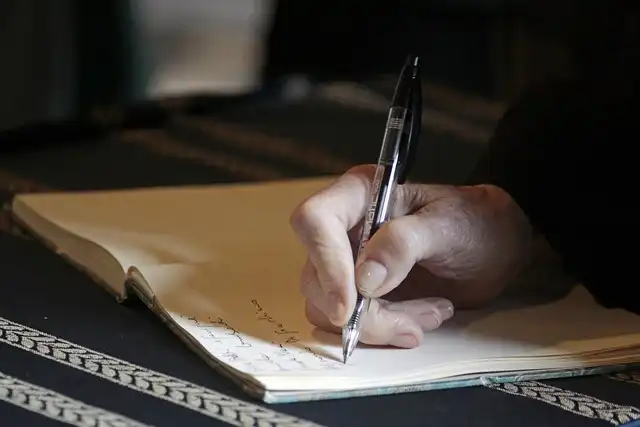
Caroline Bicks, King Chair, accessed Stephen King's archives, revealing inspirations for 'Pet Sematary' (trauma, Wizard of Oz) and 'The Shining' (Shakespearean tragedy). Her research offers new insights into King's dark creative process.
King, she keeps in mind, had actually experienced something comparable writing the scene years previously. “On the revise as I got closer to that point,” he as soon as stated in an interview, “I would certainly say to myself, eight days to the tub, and after that 6 days to the tub.
Transforming to “Graveyard Shift,” King’s 1978 short story collection, Bicks located his student newspaper columns from the late 1960s, in which a 21-year-old King explained getting typed the gut at an university peace march and created, “I wish to hit somebody. I intend to weep. I question what is happening to me.”
“After that King moves the ‘grating’ right into her throat: ‘Rachel’s voice was grating, complete of dust. Now I can appreciate just how King created it and why I’ll never be able to obtain it out of my head.”
The King Chair: Unprecedented Access
In 2017, Bicks was called the inaugural King Chair, a setting gifted in the horror writer’s honor by the Harold Alfond Structure. King provided consent for his name to be used however hardly ever came to school, and college authorities advised Bicks never to initiate call with him.
“I such as the concept that Oz the Great and Horrible was just a little small man behind a curtain with a great big voice,” he informed her. “And I have actually always assumed that death resembles that. Oz the Great and Awful is truly simply a faker.”
Pet Sematary: Confronting Deep Fears
Nearly half a century later on, Bicks sat down to review it and her body organized the exact same demonstration. By that factor in her sabbatical, she had actually begun to question whether King’s manuscripts can “pass on dark power in addition to dark tales.”
The character “seems to enjoy in the horrifying changes her body and mind are going through,” Bicks creates, “and she assumes only of the liberty they will give her. She’s nothing like the depressing, mad, relatable Carrie that I, along with generations of visitors, have actually involved connect and understand with.”
The manuscript proof for this is startling, and nowhere a lot more so than in the final lines of “Animal Sematary.” After hiding his kid Gage in the cursed ground that brings the dead back in monstrous kind, Louis Creed hides his spouse Rachel there as well, and after that waits alone in your home for whatever returns through the door.
Bicks has been afraid of “Pet Sematary” since she initially read it as a young adult, and she went into the archive wishing that comprehending just how King developed his scary might lastly loosen its grip on her. What she discovered there overthrew the means most viewers think of how scary functions.
The evening before Bicks’ first trip to the archive, she grabbed a duplicate of “Pet Sematary” she would certainly just bought at a local utilized book shop, the exact same edition she ‘d consumed 40 years earlier. As she went over the opening web pages, “it struck me exactly how uncannily comparable my recent history was to Louis Creed’s [the book’s protagonist],” she told The Blog post in an exclusive interview. “Like me, he ‘d moved his family members of four from a city to rural Maine to start a work at the University of Maine.”
King’s Early Works & Archival Journey
“As I tracked exactly how the drafts advanced, I might see the town ending up being a main personality, a representative of its very own damage,” Bicks stated. It was a love letter from King to his home town.”
She invested four years providing what she calls “amusing soliloquies to the air inside my Subaru” during her commute, envisioning discussions that never ever took place. In 2021, King called her out of the blue. She invited him to talk to trainees, he came for 2 days, and when she suggested spending her sabbatical inside his manuscripts, he and Tabitha concurred.
Shakespeare & Maine: King’s Inspirations
“When I finally asked King if I would certainly fixed this literary mystery, he disclosed that it was actually another Shakespearean disaster that had actually formed ‘The Shining,'” she told The Post. She will not identify it in our interview, preferring to save the discovery for viewers of the book, but claimed the play “is powered by the exact same theme of intergenerational trauma that haunts his unique, making it a lot greater than just a superordinary horror story.”
King had actually transferred to Durham, Maine, the community on which “Salem’s Great deal” is based, when he was 11, and told Bicks he had actually disliked it in the beginning before involving like its people, its cemetery, its rocky landscape and the real-life abandoned Victorian that inspired the story’s ominous Marsten Home.
Every morning throughout her sabbatical year acting as the Stephen E. King Chair in Literary Works at the College of Maine, Caroline Bicks drove Path 15 via rural Maine to reach Stephen King’s archive.
Resolving the drafts of “Salem’s Lot,” King’s 1975 vampire story, Bicks found a loose-leaf, hand-drawn map of the community put between the pages of a very early draft. The community was originally called Momson, and when she showed the map to King, he immediately identified the handwriting as that of his childhood friend, Chris.
Checking out drafts of “The Beaming,” Bicks discovered that King had originally divided the manuscript right into acts and scenes defined by Roman numerals, imagining the 1977 novel as a Shakespearean misfortune. Transforming to “Night Shift,” King’s 1978 brief story collection, Bicks tracked down his student newspaper columns from the late 1960s, in which a 21-year-old King defined getting punched in the intestine at a school peace march and wrote, “I want to strike someone. King, she notes, had experienced something similar writing the scene decades earlier.
Birnam Wood: King’s Metaphor for Trauma
In Shakespeare’s play, Birnam Wood is the captivated woodland whose trees soldiers lowered and carry as camouflage while closing in on Macbeth’s castle, satisfying a revelation he would certainly convinced himself could never become a reality. For King, whose monsters are inevitably regarding the previous catching up with the present, the image plainly resonates.
Arriving had actually taken years. In 2017, Bicks was called the inaugural King Chair, a position gifted in the scary writer’s honor by the Harold Alfond Structure. King permitted for his name to be made use of but hardly ever came to university, and college authorities instructed Bicks never to launch contact with him.
Near the end of the call, Bicks pointed out the final scene of “Carrie,” between remorseful Sue Snell and the passing away Carrie, and how it mirrors the bleakness of “Tomorrow and tomorrow and tomorrow” from “MacBeth.” King entered and ended up the line. He held up a Tees with “Birnam Wood” printed throughout the front.
The Wizard of Oz & Pet Sematary’s Trauma
The road runs past your house where King resided in 1978, when he was a checking out writer at the school’s Orono campus. It’s the same roadway where 2-year-old Gage Creed passes away in the author’s “Animal Sematary”– and the same stretch where King himself nearly shed his very own young child boy Owen to a speeding vehicle, an incident so distressing that he created it almost verbatim right into the unique and afterwards locked the completed manuscript in a drawer due to the fact that he found it too terrible to release.
In the earliest draft, Louis Creed’s colleague waits with him with the night and they hear one “grating step” on the kitchen floor. In the released version, the associate is gone, Louis plays jewelry alone, and King builds what’s coming completely from sound.
Guide upright a Zoom telephone call from December, with King in Florida and Bicks in Maine enjoying darkness autumn at 4 in the afternoon. She lastly asks him the concern she had actually been holding all year, regarding why “The Wizard of Oz” came to be the guiding concept of “Pet dog Sematary.”
The Researcher’s Emotional Journey
Analyzing drafts of “The Beaming,” Bicks found that King had actually originally separated the manuscript right into acts and scenes delineated by Roman numerals, imagining the 1977 novel as a Shakespearean disaster. 2 referrals to the witches from “Macbeth” that really did not endure into the published variation convinced Bicks she ‘d determined the source play. She was wrong.
Bicks was driving this course daily since King and Tabitha, his other half of 55 years, had actually provided her something no person outside their family had ever before gotten: a full year inside their personal archive, a climate-controlled area constructed right into the back of the couple’s Victorian manor in Bangor including the manuscripts, typescripts and galley evidence of almost every little thing King had actually ever before created.
Throughout all of it, Bicks maintains capturing herself in the hold of the really fear she is trying to evaluate. When she reaches the Area 217 bath tub scene in King’s initial draft of “The Beaming,” she feels something literally ruptured in her head, stops cool, goes and shuts the folder home.
1 Caroline Bicks research2 Horror Writing Process
3 Literary Archives
4 Pet Sematary inspirations
5 Shakespearean tragedy
6 Stephen King
« Michael Winkler’s Griefdogg: A Philosophical Journey into AuthenticityReading Retreats: The Rise of Literary Escapes for Millennials & Gen Z »