
Unpacking Australia’s School Funding Inequalities: A Call for Equity
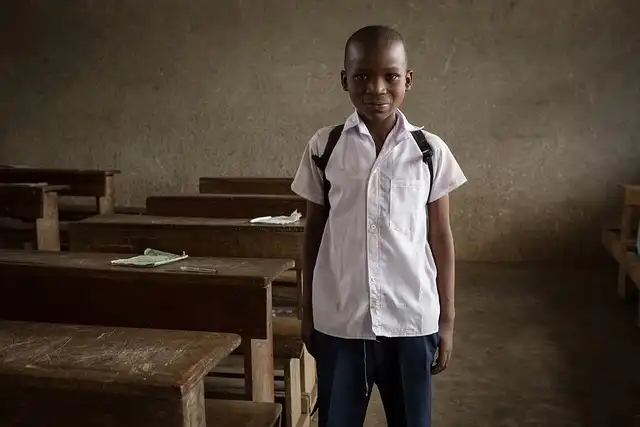
Jane Caro's 'Rich Kid, Poor Child' critiques Australia's school financing policies, highlighting inequalities and advocating for a needs-based model. It questions tax exemptions for private schools and argues for equitable resource distribution.
Exactly how might we envision and attain a much more just method to school financing policy? Rich Kid, Poor Child wanes by resolving this inquiry, offering a list of “solutions” for a “extra equal” education system.
Private institutions are free to choose and exclude pupils, including on the grounds of sex and sexuality, and to bill uncapped college fees. And: “Public funding of exclusive colleges conserves the government money.”
The Gonski Review and Student Need
Amongst many instances, Caro describes the appointing and launch of the 2011 Evaluation of Financing for Schooling, conducted by an expert panel headed by David Gonski Air Conditioner. The “Gonski Testimonial” revealed (among other points) the concentration of negative aspect in Australia’s public colleges. In an effort to resolve inequalities in Australia’s existing funding plans, it recommended a new funding version based upon the idea of student need: the Education Resource Standard.
The autonomous potential of public education is linked to recurring political battles over whose knowledge, identities and futures are acknowledged and supported within public schooling– consisting of with funding.
Historical Roots of Government Funding
By 1975– under a Whitlam Labor federal government– reoccurring government funding for independent schools remained in full swing. As Caro clarifies, Whitlam positioned this choice as “educationally needed”: that is, moneying based upon need for both public and personal colleges.
Describing a current research, she describes that even “after years of publicly funding independent schools”, Australia’s senior high schools are a few of one of the most pricey among established economies of the OECD.
Other terms of the discussion must additionally move. For example, it is troublesome to hold discussions about college funding in regards to the “cost” to the taxpayer, “cost” to the system, or describing students who are the “the most costly to educate”. Narratives similar to this (political and otherwise) can bolster marginalisation and stigmatisation. They minimize trainee demand to a fundamental, cost-benefit analysis.
The Cost of Choice and Exclusion
Until this factor, the federal government played essentially no duty in college financing. It began its participation via one-off gives for federal government and non-government schools, to sustain the building of science labs and school libraries.
Till this point, the federal government played essentially no duty in institution funding. It started its involvement via one-off grants for federal government and non-government institutions, to sustain the building of science labs and school collections.
Challenging Funding Narratives
It is vital to note that not all personal institutions are high-fee paying or elite. Caro admits she occasionally “can not aid questioning whether divide and conquer was the strategy all along”.
The outcome of unequal access to an unequally resourced “market” of institutions, Caro reveals, is the focus of social benefit and downside. Schools contend to bring in the very same collection of blessed students, that will increase their market setting for leading outcomes. At the exact same time, they contend to leave out trainees with greater demands and less prospective to blitz examinations.
Caro recommends different adjustments to existing financing plans, such as reconsidering private school tax obligation exceptions and having all institutions that obtain public cash based on the very same requirements and compliance actions. Absolutely, these would certainly go a lengthy method toward resolving the frightening inequalities laid bare in her essay.
As its caption explains, her essay details the “battle” experienced by Australian public institutions as they are typically compelled to compete with well-resourced private schools for enrolments. These independent schools are free to bill uncapped school fees and obtain federal government money.
As teacher of education and learning Jessica Gerrard creates, there is a risk in idealising the public schools of the past, which had their fair share of exclusionary techniques and bias. Combating for public education calls for acknowledging that it hasn’t always been naturally autonomous. Public colleges have likewise been sites of injury and exemption for some.
The Shift to a Market-Based System
Personal institutions are complimentary to choose and exclude pupils, consisting of on the premises of sex and sexuality, and to charge uncapped institution costs. Numerous private schools also have “philanthropic status”, giving a variety of tax obligation exceptions, consisting of incentivised contributions. While not explicitly stated in the essay, these factors likewise threaten the degree to which the Education Resource Requirement can be comprehended to work as a true “needs-based” financing design in practice.
This scenario can be associated, in big component, to our school funding setups. Recent research from the Australian Education and learning Union shows “over fifty percent of Australia’s independent schools currently get more mixed federal government financing per pupil from both the federal and state federal governments, than similar public institutions”.
Right here, Caro points to the infamous assurance made by then Labor prime minister Julia Gillard, that “no school will certainly shed a buck” as an outcome of the review or the implementation of the brand-new funding design. This implied the opportunity of a fully needs-based technique was compromised from the start.
Elisa Di Gregorio does not help, speak with, own shares in or receive financing from any kind of company or organisation that would gain from this article, and has actually disclosed no appropriate affiliations past their academic visit.
Caro papers what she refers to as the education system’s “shift from an emphasis on the public good towards the positional and private”. Aids for independent schools continued, and also expanded, yet were no more warranted by demands. Rather, a right to selection pertained to predominate.
Caro considers what she describes as the “political opportunity” for these options. It is challenging to see just how such solutions and even more simply funding policy strategies may emerge up until there is a deeper reckoning with what she determines as Australia’s unwavering political and social fidelity to institution choice and entitlement. Exactly how this might take place should also be a core component of the discussion.
The Role of Private Schools and Tax Benefits
In her essay Rich Child, Poor Youngster, public education and learning advocate Jane Caro offers a comprehensive historic excavation of Australia’s school financing plans, politics and policy ideological backgrounds over the past 65 years.
As the just recently enforced laws Better and Fairer Schools Arrangement– which seeks to address part of the financing inequality in between fields– enters effect, Caro’s lamentations and reflections are timely.
This was strengthened by the following federal government under Malcolm Fraser, who installed a “fundamental give design” for independent schools based upon privilege and choice, instead of need. Inevitably, these choices offered the basis for our present system: federal government funding for both public and personal institutions– a financing system that is globally distinct.
Funding Debates: Entitlement vs. Need
She opens her essay thinking back concerning her very own experience with New South Wales public education in the 70s and 1960s, which, she discusses, supplied her and her peers various chances. This consisted of the opportunity to mix with a socially varied team of students, regardless of their socioeconomic or social resources. It is this version of public schooling, she argues, that has actually been shed.
In feedback to these disagreements, Caro recommends that “taxation is not a bank account that we can draw on to ‘purchase’ whatever service we choose”. (In this situation, parents are buying what is “viewed as an instructional advantage”.) The “glaringly evident problem” with the tax debate, she composes, “is that when a huge component of that choice includes fee-charging schools, just parents with cash have choice”.
Caro relocates via financing policy agendas and reforms of successive federal governments, clarifying the national politics, policy concepts and plan bars that created and sustain deep inequalities in Australia’s school system.
Amongst these was the Catholic industry’s hopeless ask for financial assistance from the federal government to help with quickly boosting enrolments, and concurrently lowering supply of work and resources from its religious instructors and leaders (nuns and bros). This require “state help” was politically contentious.
Across all of these arguments, we see the stress within Australian school funding on full display: entitlement and a right to parental selection operating at the expense of college funding based on the principle of “pupil requirement”. Underpinning Caro’s argument is an idea in
It is problematic to hold discussions regarding college financing in terms of the “price” to the taxpayer, “expense” to the system, or referring to students that are the “the most expensive to inform”.
Rethinking the Future of School Funding
Caro addresses other generally stimulated rationales for supporting college choice plans, also. These include: “Private school moms and dads pay tax obligations, so their youngster is qualified to be subsidised.” And: “Public funding of independent schools conserves the federal government money.”
Component of Caro’s contribution is her discrediting of debates frequently utilized in support of the existing system. Federal governments frequently suggest for the demand to fund private schooling, to give moms and dads with obtainable options. Nevertheless, as Caro shows, private schools remain unreachable for many.
1 Australian authors2 education equity
3 Jane Caro
4 private schools
5 public education
6 school financing
« Mantle: Eco-Fiction Exploring Connection and ChangeLewisboro NY Haunted House Inspires Aimee Pokwatka’s ‘Build-up’ »