
WWII Spies: Uncovering Greece’s Hidden Treasures
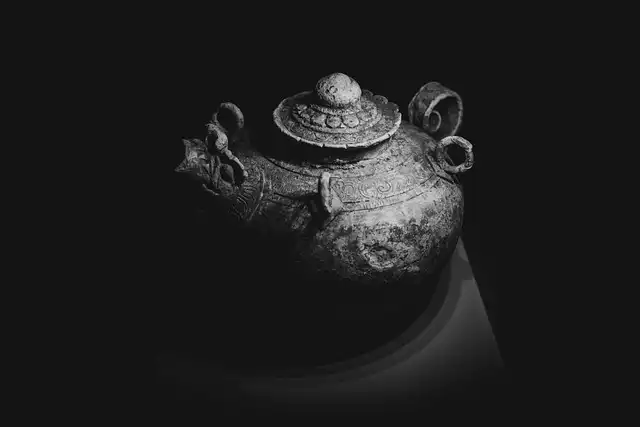
WWII saw American archaeologists transform into spies to protect Greece's ancient artifacts from Nazis. The OSS's Greek Desk, led by Rodney Young, used Greek-Americans and experts to recover treasures, battling Hitler's twisted obsession with ancient Greece.
The Genesis of the Greek Desk
In January 1943, FDR authorized an exec order creating an infantry squadron comprised of second-generation young American guys “who would fight in the places their parents had left,” composes Talty. While 1,200 “cocky and wild” recruits were delivered to Camp Carson in Colorado to be educated, that number was lowered to 212 that headed to Greece to fight the excellent battle.
Rapid ahead to June 4, 1946 and an event in among the grand halls of the National Archaeological Gallery in Athens. With an event of curators and Athenians present, employees collected buried classical times maintained concealed from the Nazis throughout the battle.
Recouping from his injuries, Youthful continued running the Greek Workdesk and training his operatives– consisting of Dorothy Hannah Cox, a 50-year-old “spirited, hard” excavation engineer and specialist in ancient coins. The OSS supplied her a role as a secret agent, with the idea that she would use her job working for Greek Battle Relief as a cover.
Rodney Youthful, an American archeologist without any military experience, yet had dealt with digs in Greece, created what became known in Washington, DC, as the “Greek Workdesk.” Youthful’s actual work: to transform epigraphers, scholars, classicists and archaeologists right into spies. James Whitmore/The LIFE Picture Collection/Shutterstock
“It would certainly take another two years for the museum to be ready for opening. And in 2013, writes Talty, “the Greek Ministry of Culture announced the return of more than 10,000 antiques, all taken by the Nazis.”
Young eventually worked out in Athens at the famous American School of Classic Researches, which became his online. Not long after the Nazi profession, he was struck by shrapnel from a surge, and his intestinal tracts and tummy wall surface were permeated. According to the writer, an Athens paper reported that “new American blood is now contributed to that shed in 1821 for Greek independence.”
The Nazi Obsession with Ancient Greece
In addition to his “Final Remedy” for the Jews– some 70,000 would certainly be exterminated in Greece alone– and his need to ultimately rule the globe, Adolph Hitler bizarrely thought that ancient Greece was founded by Aryans. Therefore he had actually instructed his Nazi classicists to draw from the planet what he thought would be Germanic finds, ultimately proving the link with ancient Greece.
Quickly after the occupying Nazi army goose-stepped right into Greece in the springtime of 1941, officers of the Wehrmacht got in Athens’ neoclassical National Archaeological Gallery. Not long after the Nazi line of work, he was struck by shrapnel from an explosion, and his intestinal tracts and belly wall were penetrated. Not long after the Nazi occupation, he was struck by shrapnel from an explosion, and his intestines and tummy were permeated. Quickly after the occupying Nazi military goose-stepped into Greece in the spring of 1941, police officers of the Wehrmacht entered Athens’ neoclassical National Archaeological Museum. Not long after the Nazi occupation, he was struck by shrapnel from an explosion, and his intestines and tummy were penetrated.
Young settled in Athens at the renowned American College of Classic Studies, which became his home. Not long after the Nazi occupation, he was struck by shrapnel from an explosion, and his intestines and stomach were passed through. James Whitmore/The LIFE Image Collection/Shutterstock
To do fight versus the Nazi profession of Greece, in addition to Hitler’s agenda to capture the classical times, Head of state Franklin Delano Roosevelt appointed Military General William “Wild Costs” Donovan, head of America’s Office of Strategic Services (OSS)– the precursor to the CIA– to develop a clandestine intelligence group.
Shortly after the inhabiting Nazi army goose-stepped right into Greece in the spring of 1941, police officers of the Wehrmacht went into Athens’ neoclassical National Archaeological Museum. Their goal: To seize a prize of antiquities– a sculpture of Zeus, the Mask of Agamemnon and hundreds of other items– and return all to the fatherland as their leader had actually ordered.
Recovering and Protecting Antiquities
Together with spy school, Donovan established a commando unit composed of the American-born boys of immigrants that, as the author notes, were “eager and probably all set to kill the inhabitants of their genealogical homelands.”
The strategy was to develop small guerrilla systems, with manpower coming from Greek immigrant neighborhoods in the United States, of “spies and the commandos” to stop the Nazis. Donovan hit up Harvard and Yale grads in his employment for “inside men.” He likewise required someone really tuned-in and risk-taking to run the private procedure– basically, a “spymaster,” discloses Talty.
Quickly after the occupying Nazi army goose-stepped right into Greece in the spring of 1941, police officers of the Wehrmacht entered Athens’ neoclassical National Archaeological Gallery. Their objective: To take ownership of a treasure of classical times.
Rodney Young, an American archeologist with no army experience, but had actually dealt with digs in Greece, developed what became understood in Washington, DC, as the “Greek Workdesk.” Youthful’s actual work: to turn epigraphers, scholars, classicists and excavators into spies. James Whitmore/The LIFE Image Collection/Shutterstock
For several years, the Nazis asserted “Aryans were the designers of the globe’s very first terrific human being … Hitler and his lieutenants were obsessed, in varying degrees, on old Greece and its artifacts,” according to the writer.
Donovan made his means to Greece and was “pleased” by the people’ “high spirits,” writes the author. On the general’s return home, he determined that a “traditional spy network” be created because, controversially, he thought that the “Allies could not count on traditional pressures alone to beat the Germans.”
The Spymaster and His Operatives
Yet they had no success, since there were no such finds. They left empty-handed, as did the shocked Nazi policemans who had gotten in the gallery in Athens with high expectations Instead, every one of the prizes were gone– lots of hidden underground as insurance coverage against the Nazi profession.
In July 1942, the recruits, primarily Greek-Americans, started 4 weeks of standard training in spy craft: from exactly how to develop a cover identification to just how to fatally blade a Nazi sentry, along with learning codes and cryptography.
Shortly after the inhabiting Nazi army goose-stepped into Greece in the springtime of 1941, officers of the Wehrmacht entered Athens’ neoclassical National Archaeological Gallery. Their goal: To seize a treasure of antiquities. Yet they failed due to the fact that a team of archaeologists and classicists (above) worked to conceal them initially. Courtesy of National Archaeologi
Donovan selected Rodney Young, a handsome 33-year-old American archeologist with no army experience, however that had worked with digs in Greece, to pull the group with each other and form what ended up being recognized in Washington as the “Greek Workdesk.”
The Aftermath and Legacy
A rich kid with impressive credentials, Young is described by Talty as “an East Coastline blue blood.” His mom belonged to the Ballantine family members, Scottish rivals to American beer empires like Pabst. The future spymaster had grown up in a Greek Resurgence mansion in Newark, NJ, and a country home in Bernardsville. He found out Greek at the unique St. Paul’s College in New Hampshire and researched at Princeton like his forebears.
Young cleared up in Athens at the well known American School of Classical Studies, which became his home base. But not long after the Nazi occupation, he was struck by shrapnel from a surge, and his intestinal tracts and belly were permeated. James Whitmore/The LIFE Photo Collection/Shutterstock
1 Archaeology2 cross-border trade
3 Espionage
4 Greece
5 Nazi occupation
6 WWII
« Eunice Carter & Polly Adler: The Unsung Women Who Brought Down Lucky LucianoThe End of Love: A Post-Apocalyptic Tale of Survival and Mythmaking »